
Stock Market Forecasts: Pretend Precision Where There is No Precision
We feel more comfortable when there is certainty, especially when it comes to investing. So investors look to “experts” for stock market forecasts (price targets), yet most expert predictions are no better than using a magic eight ball.
Wall Street stock strategists have underestimated the S&P 500 annual index returns in 14 of the last 17 years, missing year-end price targets on average by approximately 10%. The 2025 market consensus forecast was for high single digit or maybe 10% growth for the year. The S&P was up almost 18%.
Did anyone predict a global pandemic in 2020? The S&P declined 34% in a month from its high February 19th to its low March 23rd. During that decline did anyone predict that the S&P would then finish up 18% for the year?
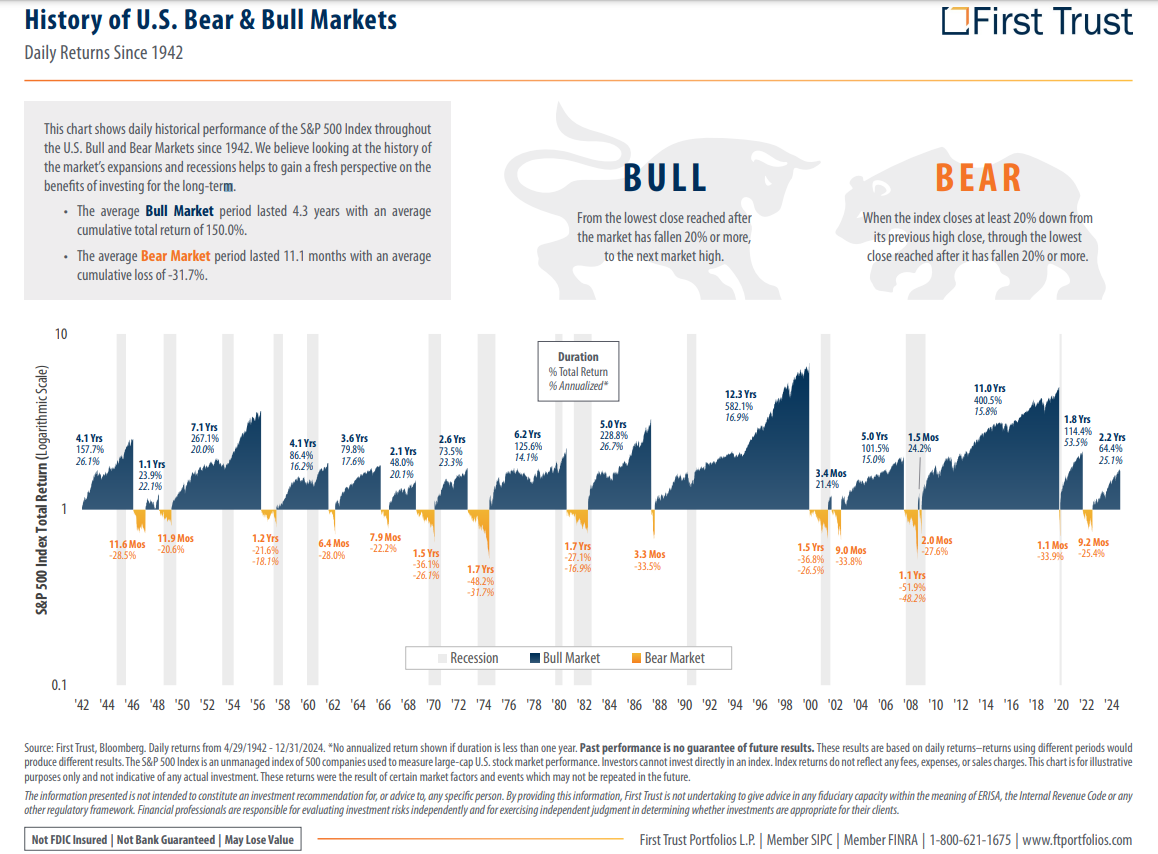
There are more up markets than down markets
Historical Bear market downturns for the S&P (20% drop in a year) are relatively short lived. The average round trip from a market high to a market low AND back to the previous high is roughly 2 ½ years. Bear markets happen on average once every 6-7 years, but they can occur more or less frequently.
Context of other declines -
5% pullback, 3-4 times per year
10% correction, every 16 months - 2 ½ years
The average annual return for the S&P is 10% since 1928; however, it very rarely returns 10% in any given year. There are big up and down swings from this average. For example, in recent years, 2022-2025, the S&P returns ranged from -18.1% to +28.7%, which is an extreme example of volatility. Stock market volatility is to be expected and it is the cost for getting better long-term returns than either cash or bonds.
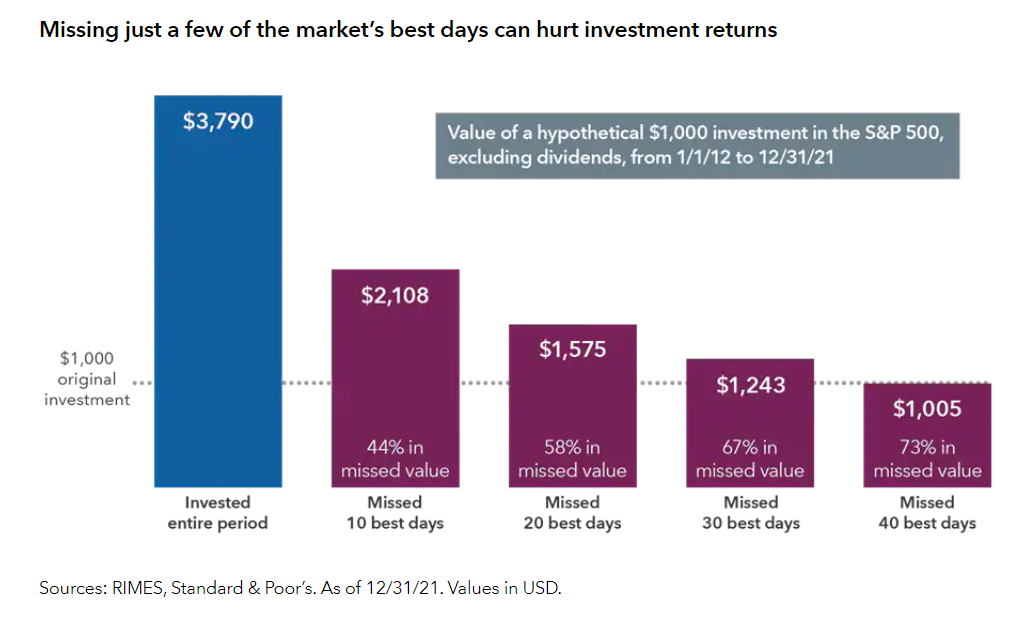
There is a cost to trying to time the market
Time in the market is more important than timing the market. It can be costly trying to time the market.
Invest consistently based on your long-term goals.
Have a financial plan that you can stick to knowing that market swings will happen.
Control what you can control. Don’t let your emotions, or the latest market prediction, dictate investment decisions.
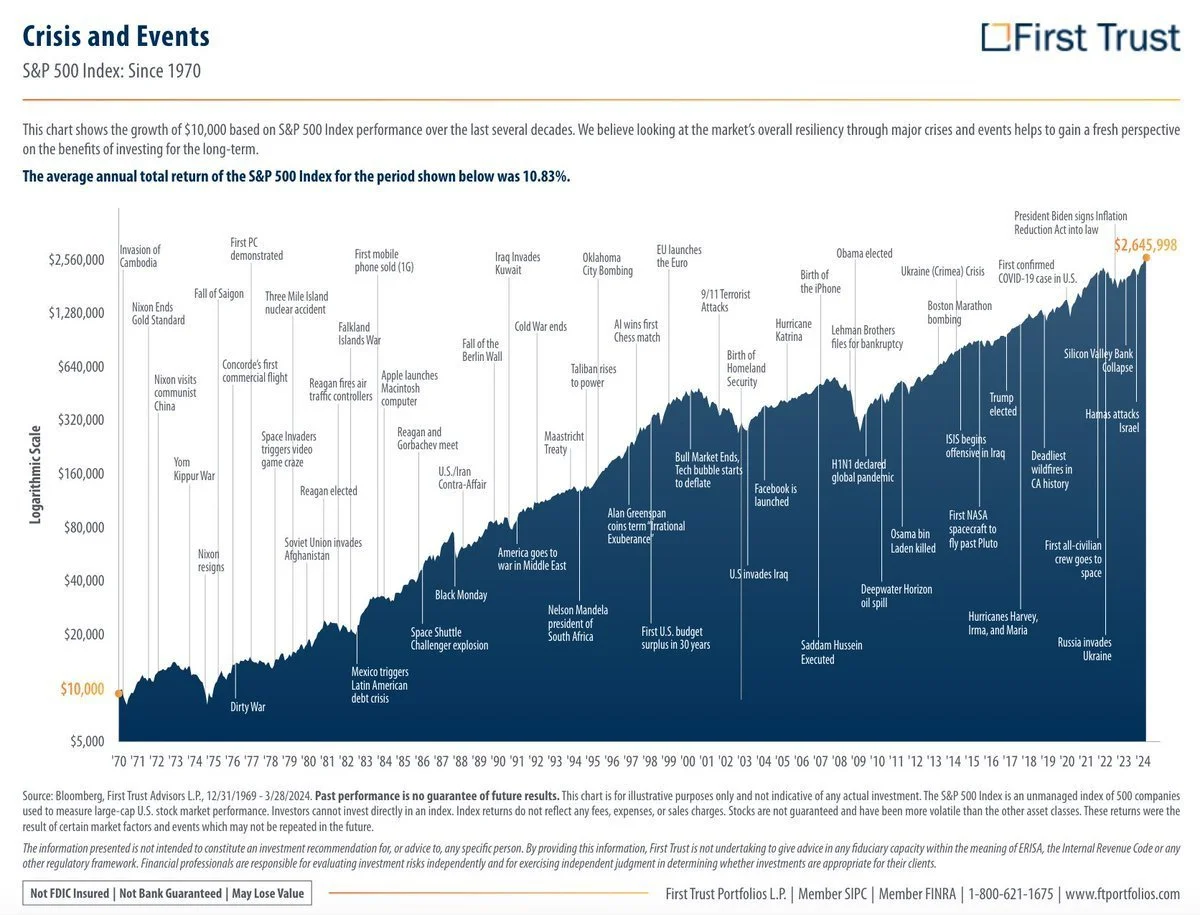
The growth of the S&P 500 over market cycles and news cycles
What is the best investment plan for this year?
The best investment plan is one you can stick to. A financial planner creates an investment plan that matches a client’s financial goals. The plan is built to weather short-term unpredictability of markets. A good planner understands the interplay of company earnings, economic data, and consumer sentiment. These are used to guide the client and their portfolio to meet their specific financial goals.
A successful investor works a plan and stays invested through the market cycles and does not make investment decisions based on the latest news cycle.